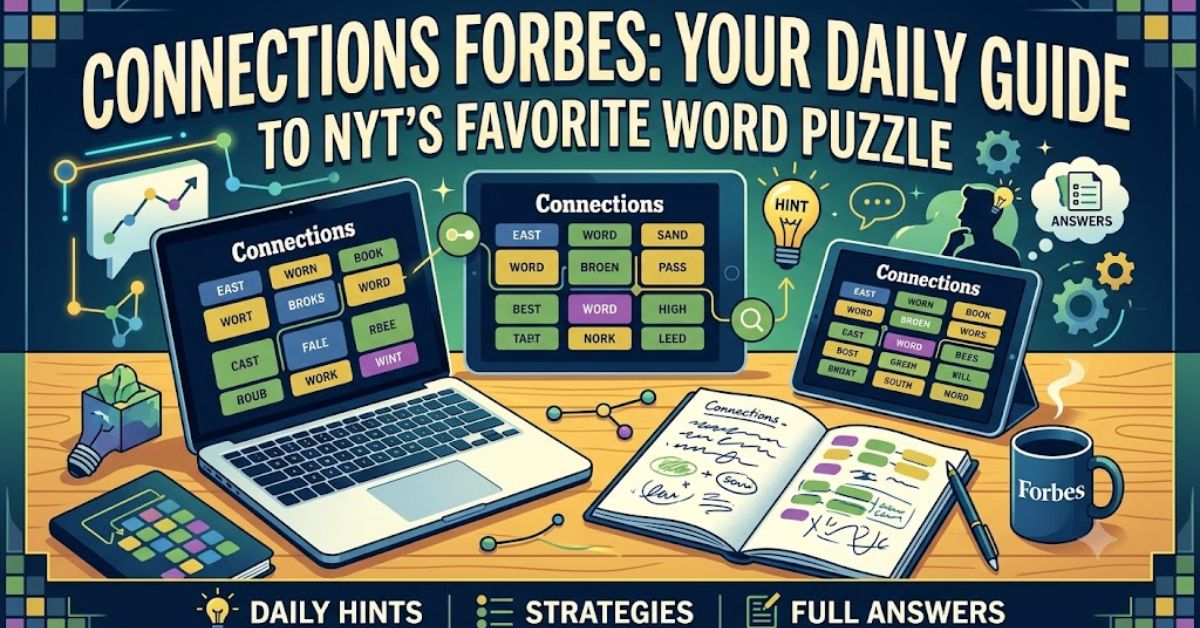
Connections Forbes: Your Daily Guide to NYT’s Favorite Word Puzzle
Word puzzle lovers across the internet have found a reliable companion in Connections Forbes coverage. Every single day, Forbes publishes hints, clues, and full answers for the New York Times Connections game, helping millions of players keep their solving streaks alive without the frustration of a failed attempt.
This growing corner of Forbes’ entertainment section has become a go-to destination for casual gamers and puzzle enthusiasts alike. Whether someone is stuck on a tricky purple group or simply wants a quick confirmation before submitting an answer, these guides deliver exactly what’s needed.
In this article, we’ll explore what makes this daily coverage so popular, how it works, and why so many readers now treat it as an essential part of their morning puzzle routine.
What Is the NYT Connections Puzzle?
Connections is a free daily word game published by The New York Times. Players are given a grid of sixteen words, phrases, or short terms and must sort them into four hidden groups of four. Each group shares a secret theme, ranging from simple synonyms to clever wordplay.
The game rewards sharp thinking but punishes careless guessing. Players are allowed only four mistakes before the round ends, which makes accuracy just as important as speed. Categories are typically color-coded by difficulty, with yellow being the easiest and purple representing the trickiest, most deceptive group.
Because the puzzle often hides red herrings and misleading overlaps, many players search for outside help. That’s exactly where dedicated puzzle columns step in, offering structured support without spoiling the fun entirely for those who only need a nudge.
Why Forbes Covers Connections Every Day

Forbes recognized early that puzzle content draws consistent, loyal traffic. Readers don’t just visit once; they return daily, often at the same time, to check that day’s grid. This habitual behavior makes Connections Forbes articles a valuable and sustainable content category.
Unlike breaking news, puzzle coverage isn’t time-sensitive in a stressful way. It offers a low-pressure, enjoyable reason for readers to visit repeatedly. Writers covering the game build genuine rapport with their audience, often including personal notes, community shoutouts, and casual commentary alongside the actual hints.
This consistency has turned individual contributors into recognizable voices within the puzzle community. Readers frequently return not just for the answers but for the writing style, humor, and reliability that come with familiar, trusted bylines.
How the Hint Structure Typically Works
Most puzzle columns follow a layered approach designed to avoid unnecessary spoilers. This structure typically includes:
- A general hint section describing each category loosely, without naming specific words
- A moderate spoiler section offering stronger clues for readers who are still stuck
- A full answer reveal placed near the end for those ready to see everything
This tiered format respects different reader preferences. Some people want minimal help and stop reading after the first section, while others scroll straight to the bottom for complete answers.
The layered approach also improves readability and keeps articles engaging rather than feeling like a plain answer dump. It transforms a simple daily task into something closer to a shared solving experience between writer and reader.
Benefits of Following Daily Puzzle Coverage
Following a consistent puzzle guide offers more than just quick answers. Regular readers often report genuine improvements in their vocabulary, pattern recognition, and lateral thinking skills over time, since exposure to varied categories trains the brain to spot subtle connections faster.
There’s also a community aspect worth mentioning. Many columns encourage discussion, invite feedback, and build small but engaged reader bases who enjoy comparing notes on tricky categories or unexpected twists in that day’s puzzle.
Finally, this kind of coverage helps preserve winning streaks, a feature many players take seriously. Losing a long streak due to one difficult purple group can feel disappointing, so having a trustworthy backup resource reduces that risk significantly.
Tips for Solving Without Full Spoilers
Not every reader wants the complete answer immediately. For those hoping to solve independently, a few strategies can help:
- Start with the words that feel most obvious to eliminate easy categories first
- Watch for red herrings, since overlapping words often belong to different groups than expected
- Avoid rushing on purple categories, as they frequently rely on wordplay rather than direct meaning
Reading only the general hint section before attempting the puzzle can preserve most of the challenge while still offering a helpful safety net. This balance keeps the experience rewarding rather than reducing it to simple copying.
Players who genuinely want to improve their solving skills over time should try engaging with hints sparingly, saving full answer sections only for puzzles that feel truly unsolvable within a reasonable number of guesses.
Comparing Coverage Styles Across Outlets

While several publications cover this puzzle, coverage style varies noticeably between them. Some outlets stick to short, purely functional answer lists, while others blend personality, humor, and storytelling into their daily posts, creating a more enjoyable reading experience overall.
Consistency tends to separate the strongest columns from the rest. Publishing hints reliably at the same time each day builds trust and habit, encouraging readers to bookmark specific columns rather than searching randomly whenever they get stuck.
Additional value often comes from explainer-style follow-up posts, where writers break down why certain categories worked the way they did. This deeper analysis appeals to readers who enjoy understanding puzzle logic rather than only receiving the final answer.
Who Reads These Puzzle Guides?
The audience for daily puzzle hints is surprisingly broad. Commuters solving during a morning train ride, remote workers taking a mental break, and puzzle enthusiasts competing informally with friends or family all represent common reader types.
Many readers treat the puzzle as a shared social activity, discussing results with coworkers or group chats. This social dimension increases engagement with supporting articles, since readers often want confirmation or clarification before sharing their results with others.
Age groups also vary widely, from younger readers drawn to quick daily games to older audiences who enjoy the mental exercise these puzzles provide. This broad appeal helps explain why puzzle coverage remains a steady, dependable content category.
Common Mistakes Puzzle Solvers Make
Even experienced players fall into predictable traps. One frequent mistake is assuming the most obvious category is correct simply because four words seem to fit together neatly, without considering that a trickier grouping might steal one of those words entirely.
Another common error involves ignoring category titles shown on the board itself. These titles often contain subtle wording clues that point toward the intended theme, yet many players skip over them while focusing only on the sixteen words presented.
Rushing through early guesses is also risky. Since only four mistakes are allowed, players who guess impulsively on uncertain categories often burn through their attempts before reaching the genuinely difficult purple group near the end.
How to Access Daily Coverage Reliably
Readers who want consistent access to puzzle hints usually develop a simple routine. Bookmarking a specific column, checking it around the same time each morning, or following a favorite writer’s author page all make daily visits easier and more habitual.
Some readers also join community spaces connected to these columns, such as newsletters or discussion groups, where puzzle fans compare answers, share reactions, and discuss particularly tricky categories from that day’s grid together.
Building this small daily habit turns a two-minute puzzle into a recurring moment of enjoyment. Over time, many readers report that checking their preferred column feels less like searching for answers and more like catching up with a familiar routine.
The Growing Role of Puzzle Journalism
Puzzle-focused journalism has expanded considerably in recent years, driven largely by the popularity of daily games. Publications that once focused purely on breaking news now dedicate ongoing sections to games coverage, recognizing the loyal readership these formats consistently attract.
This shift reflects a broader trend toward habit-forming content. Readers increasingly value short, enjoyable rituals they can return to daily, and puzzle hints fit that need perfectly by offering a quick, low-stress activity amid busier news cycles.
As more outlets invest in this space, competition for reader loyalty continues to grow. Writers who combine accuracy, personality, and consistency tend to stand out, turning simple hint columns into recognizable, trusted destinations within a crowded content landscape.
What Makes a Puzzle Column Worth Following
Not every hint column earns lasting reader loyalty. The strongest ones share a few defining traits: clear formatting, honest difficulty ratings, and a writing voice that feels genuine rather than mechanical or purely transactional in tone.
Timeliness matters just as much as quality. A column published late in the day loses much of its usefulness for readers checking during their morning routine, so reliability in scheduling often becomes just as important as the accuracy of the answers themselves.
Readers also appreciate small extra touches, such as difficulty ratings, brief personal anecdotes, or links to previous puzzles within the same series. These details transform a purely functional resource into something closer to a daily read worth genuinely looking forward to each morning.
The Role of Streaks in Player Motivation
Streak tracking has become one of the most powerful motivators in daily puzzle games. Many players feel a strong sense of accomplishment watching their consecutive-day count grow, and losing that streak over a single tough category can feel surprisingly disappointing.
This psychological pull explains why reliable hint columns matter so much. Knowing that backup support is available removes some of the pressure attached to daily play, allowing players to enjoy the challenge without the constant fear of an accidental loss ending their run.
Some players even set personal rules, only checking hints after multiple failed attempts, to preserve the spirit of genuine problem-solving while still protecting their streak when a category proves unusually deceptive or ambiguous in its wording.
Final Thoughts
Daily puzzle journalism has carved out a unique space within larger entertainment coverage. Connections Forbes style articles combine practical utility with approachable writing, giving readers exactly what they need without unnecessary complexity or clutter.
As puzzle games continue growing in popularity, this kind of structured, reader-friendly coverage will likely expand further. The format works because it respects reader time while still offering enough personality to keep people coming back.
For anyone looking to maintain a solving streak, sharpen their thinking, or simply enjoy a short daily mental break, following a trusted puzzle column remains one of the simplest and most satisfying habits to build into a daily routine. It’s a small ritual, but one that consistently delivers value, one puzzle at a time.