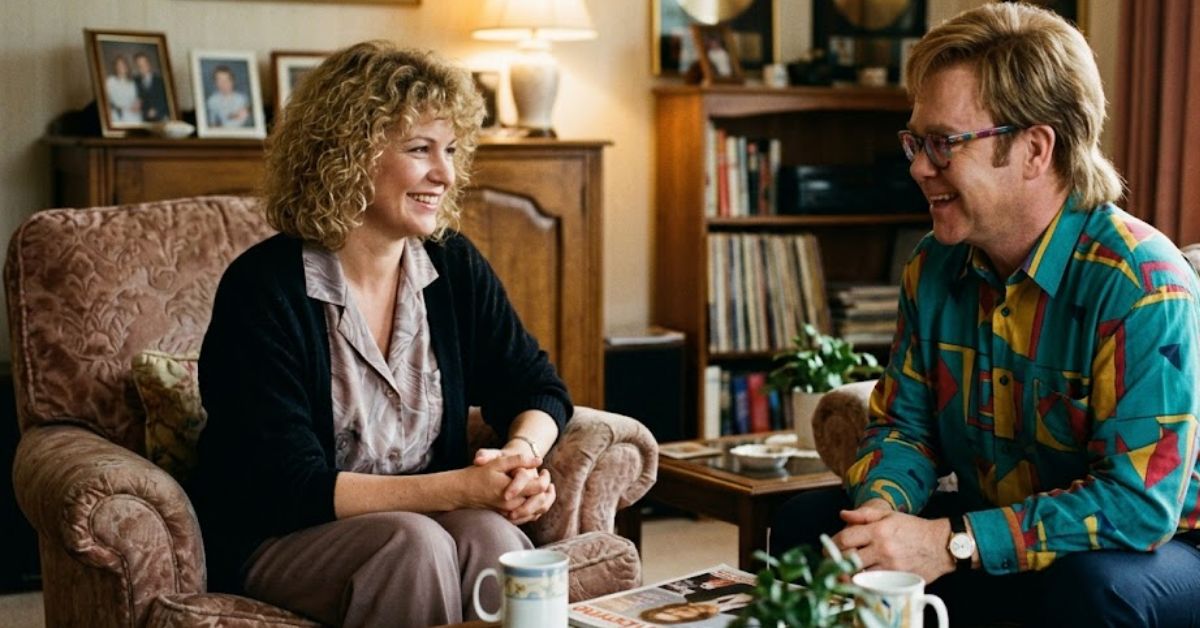
Renate Blauel: The Story of Elton John’s Ex-Wife
Renate Blauel is best known as Elton John’s former wife, but that description leaves out the professional identity she built in recording studios. A German sound engineer who preferred technical work to celebrity attention, she became part of one of the most discussed marriages in 1980s pop culture. Her later legal dispute with John also raised important questions about privacy, memoirs, and the limits of public storytelling.
Who Is Renate Blauel?
Renate Blauel worked behind the scenes in the music business during an era when relatively few women held technical studio roles. Reliable profiles describe her as a German-born sound engineer and recording technician. She became publicly recognizable only after her relationship with Elton John, even though her work in audio production came first. That distinction matters because many online summaries reduce her life to a short chapter in someone else’s biography.
Some websites give March 1, 1953, as her birth date and identify Munich or Berlin as her birthplace. Others say that she previously worked as a Lufthansa flight attendant. These details are widely repeated but inconsistently documented by strong primary sources. A responsible biography should treat them as reported claims, not settled facts. Her German background, studio career, 1984 marriage, 1988 divorce, and later privacy dispute are much better established.
| Quick fact | Available information |
|---|---|
| Full name | Renate Blauel |
| Nationality | German |
| Profession | Sound engineer and recording technician |
| Known for | Her studio career and marriage to Elton John |
| Marriage date | February 14, 1984 |
| Divorce finalized | 1988 |
| Public profile | Highly private |
| Major legal dispute | Privacy case involving Elton John in 2020 |
Renate Blauel’s Sound Engineering Career
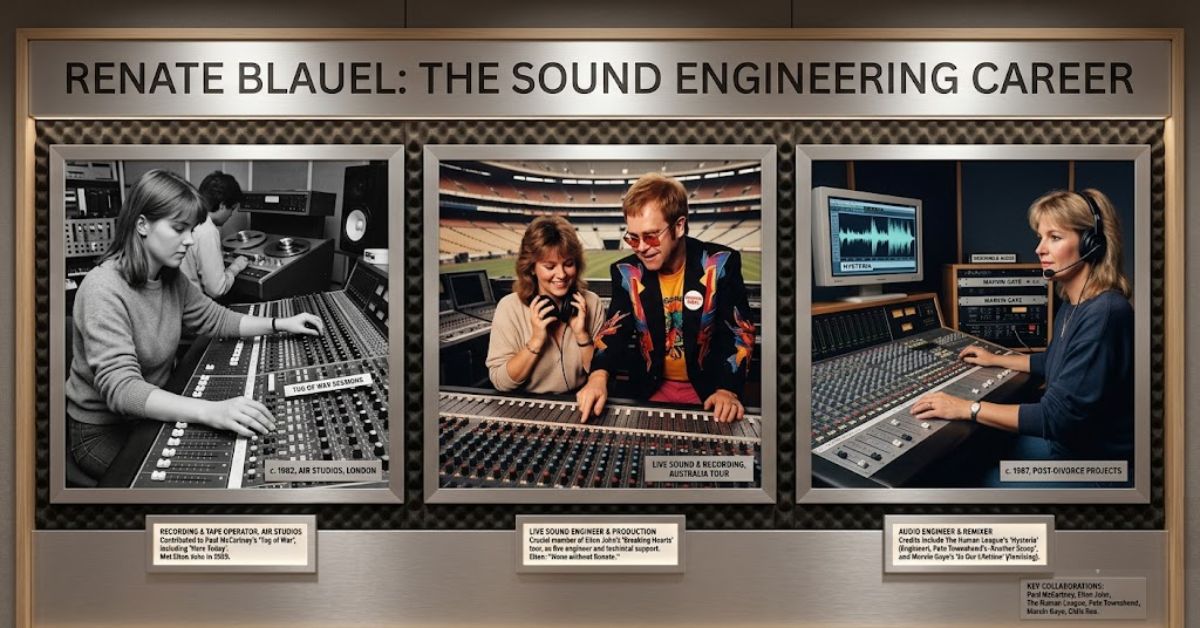
Blauel entered professional recording environments as a technician and engineer, jobs that demand precision, patience, and strong listening skills. Sound engineers help capture performances, manage equipment, solve technical problems, and support producers during recording and mixing. Her career placed her close to major artists without making her a public performer. That behind-the-scenes role also helps explain why she appeared uncomfortable with the intense media attention that followed her marriage.
Most accounts connect her meeting with Elton John to studio work surrounding his 1983 album Too Low for Zero. The album was recorded at AIR Studios and became a major commercial comeback for John, producing hits such as “I’m Still Standing” and “I Guess That’s Why They Call It the Blues.” Official album information confirms the project’s production context, although popular biographies provide more detail than surviving headline credits about Blauel’s exact duties.
Her technical work would have involved responsibilities such as:
- Preparing and checking studio equipment
- Assisting with recording sessions
- Monitoring audio quality
- Supporting engineers and producers
- Identifying and correcting technical problems
- Helping maintain consistent sound across sessions
Unlike singers and musicians, recording technicians rarely receive broad public recognition. Their contribution is nevertheless essential because poor recording decisions can weaken even a strong musical performance.
How Renate Blauel Met and Married Elton John

John and Blauel developed a close relationship after meeting through the music industry. While he was touring in Australia, he proposed during dinner in Sydney. They married on February 14, 1984, at St. Mark’s Church in Darling Point. The Valentine’s Day ceremony attracted enormous press interest because John was one of the world’s biggest music stars and had publicly described himself as bisexual years earlier.
The marriage was presented at the time as a sudden romantic decision, but later reflections made the situation appear far more complicated. John has said that he cared for Blauel while struggling to accept his sexual orientation and trying to create a conventional family life. That explanation provides context, but it does not erase the effect on Blauel. Public accounts of the relationship largely come from John, while she has consistently avoided telling her side in interviews.
Key Marriage Timeline
| Date | Event |
| 1983 | Blauel and John reportedly became close through studio work |
| February 10, 1984 | John reportedly proposed in Sydney |
| February 14, 1984 | The couple married in Australia |
| 1988 | Their divorce was finalized |
| 2019 | John’s memoir Me and the film Rocketman were released |
| 2020 | Blauel brought a privacy-related legal claim |
| October 2020 | The dispute ended through a private settlement |
The wedding was not merely a private ceremony. It became an international entertainment story, placing Blauel under a level of scrutiny that did not match the quiet professional life she had previously maintained.
Why Renate Blauel and Elton John Divorced
Renate Blauel and Elton John divorced in November 1988 after roughly four years of marriage. Reports from the period described the separation as amicable, and Blauel did not launch a public media campaign against him. John later spoke with regret about the pain caused by the marriage and its ending. He subsequently identified publicly as gay and later built a long-term partnership and marriage with filmmaker David Furnish.
The most useful way to understand the breakup is to avoid turning it into a simple scandal story. Their marriage existed within the pressures of fame, identity, addiction, and social expectations during the 1980s. Those pressures may explain decisions, but they do not prove what Blauel privately felt or wanted. Because she chose silence, articles should separate John’s later interpretation from her own documented position rather than pretending both perspectives are equally available.
Public Narrative Versus Established Facts
| Common statement | More accurate interpretation |
| The marriage was completely fake | John said he cared for Blauel, although he later described struggling with his identity |
| Blauel publicly blamed John | She largely avoided interviews and public criticism |
| The exact reason for the divorce is fully known | Most detailed explanations come from John’s later accounts |
| The divorce produced a public legal battle | The original 1988 separation was handled privately |
| Blauel wanted continuing media attention | Her actions indicate a strong preference for privacy |
Understanding this distinction prevents assumptions from being repeated as facts. It also recognizes that only one person in the marriage has provided an extensive public account.
Conclusion
Renate Blauel’s public story combines professional achievement, an intensely scrutinized marriage, and a determined retreat from fame. She worked in sound engineering before becoming Elton John’s wife, married him in 1984, divorced him in 1988, and later challenged disclosures about their relationship. The central facts are straightforward, but many details repeated online remain weakly documented or come mainly from John’s perspective.
A credible account of Renate Blauel should therefore resist sensationalism. Her connection to Elton John explains public interest, but it should not erase her career or her right to privacy. The most accurate conclusion is also the simplest: she was a skilled studio professional whose brief marriage became globally famous, while she herself chose a life away from celebrity attention.