


Jose Darey Castro is a Mexican singer, songwriter, accordionist, and producer best known as the creative force behind Los Dareyes de la Sierra. For nearly three decades, he has worked inside regional Mexican music while adapting to changing audiences, production styles, and distribution platforms. His career connects classic norteño and corrido traditions with the newer corridos tumbados movement that has expanded the genre’s reach across the United States and beyond. Jose Darey Castro, leader of Los Dareyes de la Sierra, his hit songs, Redención album, major collaborations & regional Mexican legacy today.
Interest in Jose Darey Castro grew sharply after Redención arrived in 2025. The 14-track project reached No. 3 on Spotify’s Top Albums Debut Global chart and introduced his seasoned voice to younger listeners. However, one detail needs clarification: Redención is officially credited to Los Dareyes de la Sierra, not released as a separate solo album under Castro’s personal name, even though he is the project’s central singer and public face.
Who Is Jose Darey Castro?
Jose Darey Castro Borbón is the vocalist and accordionist associated with Los Dareyes de la Sierra, a group widely reported as founded in 1997 in Navojoa, Sonora, Mexico. Public trademark records also identify Castro as the owner of the Los Dareyes de la Sierra name. That legal and artistic connection helps explain why the group is often discussed almost interchangeably with Castro himself, especially in recent coverage and promotional material.
His role goes beyond standing at the microphone. Castro has contributed as a songwriter, instrumentalist, producer, and musical decision-maker. That combination matters in regional Mexican music, where a recognizable voice may attract attention, but durable careers usually depend on repertoire, arrangements, musicianship, and relationships with other artists. His documented composition and production credits show that he understands both the performance side and the behind-the-scenes work needed to sustain a catalog.
| Quick fact | Details |
|---|---|
| Full name | José Darey Castro Borbón |
| Nationality | Mexican |
| Profession | Singer, accordionist, songwriter and producer |
| Main musical project | Los Dareyes de la Sierra |
| Group origin | Navojoa, Sonora, Mexico |
| Reported founding year | 1997 |
| Main genres | Norteño, corridos, banda, cumbia and romantic music |
| Major 2025 release | Redención |
| Redención chart result | No. 3 on Spotify’s Top Albums Debut Global |
The biographical, ownership, release, and chart details above are supported by AllMusic, U.S. trademark records, Spotify, and the Los Angeles Times.
Early Career With Los Dareyes de la Sierra
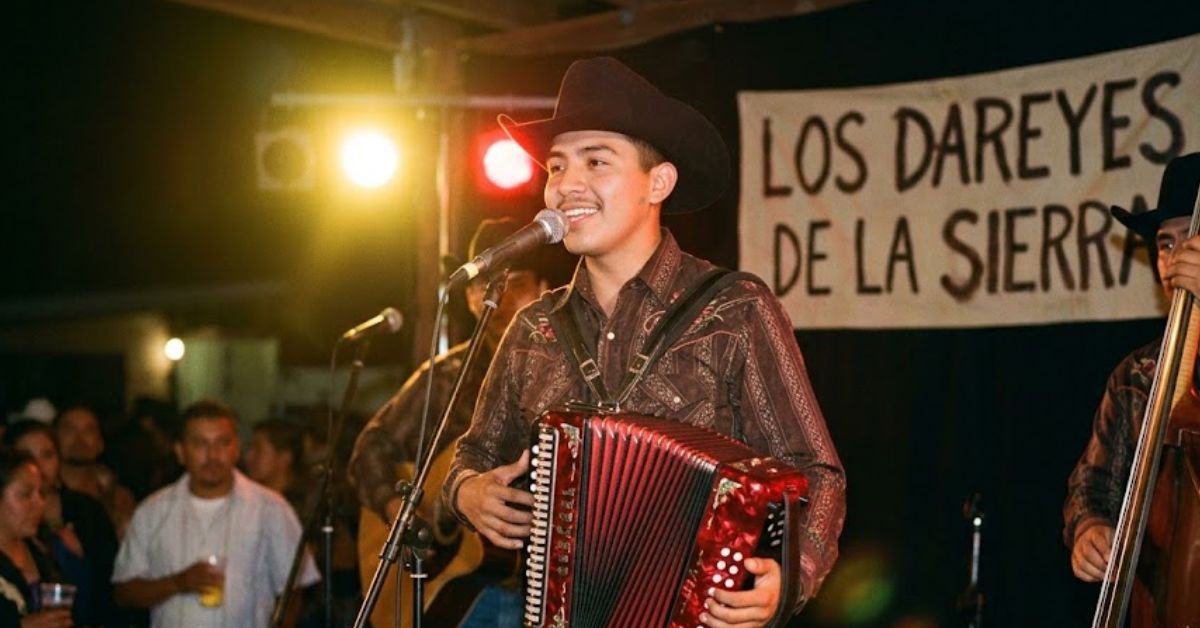
Los Dareyes de la Sierra developed within the musical culture of northwestern Mexico, where accordion-led norteño, sierreño arrangements, corridos, cumbias, and romantic songs often share the same audience. AllMusic describes the group’s sound as a blend of traditional forms, including corrido, banda, norteño, and mariachi, with modern production techniques. That flexibility became one of Castro’s strongest advantages because it allowed the project to move between storytelling, dancing, heartbreak, and harder-edged material.
The group’s early catalog included albums such as Duelo de Shakas, El Águila Real, and Con Banda. These releases helped establish Los Dareyes de la Sierra before streaming became the dominant way listeners discovered Mexican music. Castro therefore built his career during the CD, radio, live-event, and music-video eras, then had to adjust to playlists, social platforms, global streaming charts, and collaborations designed to connect established performers with younger fan bases.
| Career period | Dominant approach | Representative material | Main purpose |
|---|---|---|---|
| Early 2000s | Traditional norteño and corridos | El Águila Real | Establish a regional identity |
| Late 2000s | Banda and romantic crossover | Con Banda, “Hasta el Día de Hoy” | Expand radio recognition |
| 2010s | Polished and varied production | Sangre Guerrera and later releases | Maintain a broad catalog |
| 2025 era | Collaborative modern corridos | Redención | Reach younger global listeners |
This progression is based on the group’s documented discography and the stylistic development described by AllMusic and Apple Music.
What Makes His Musical Style Distinctive?
The signature Jose Darey Castro sound starts with contrast. His vocals can sound weathered and forceful, while the accordion adds movement and melodic identity. Traditional arrangements give the music regional credibility, but modern percussion, polished production, and collaborative songwriting make newer releases easier to place beside contemporary corridos tumbados. The result is not a rejection of the past. It is a controlled update that keeps the emotional directness of older norteño music.
That balance explains why Castro can record a romantic song, a street-oriented corrido, or a faster party track without making the catalog feel disconnected. Apple Music describes Los Dareyes de la Sierra as mixing corrido, banda, norteño, and mariachi influences with modern production and electronics. For listeners, the practical difference is simple: the music remains rooted in northern Mexican tradition, but it does not feel trapped inside the production choices of the early 2000s.
A practical checklist of the elements associated with his music includes:
- Accordion-led melodic arrangements
- Direct corrido and romantic storytelling
- Norteño, banda, cumbia, and sierreño influences
- Strong, recognizable lead vocals
- Modern production and collaborative releases
- Songs aimed at both legacy and younger audiences
Jose Darey Castro Songs That Defined His Career

Long before Redención, Los Dareyes de la Sierra had songs that defined Castro’s public identity. “Hasta el Día de Hoy” became a significant regional Mexican radio title and remained on Billboard’s Regional Mexican Airplay chart for 11 weeks in 2008. Other recognized recordings include “Sufre,” “Enséñame a Olvidar,” and “Quisiera Ser una Lágrima.” Together, they show the group’s ability to move between emotional ballads and narrative-driven regional styles.
New listeners should not judge the catalog only through recent collaborations. The older material reveals the phrasing, accordion work, and romantic storytelling that made later reinvention possible. A useful listening path begins with the established hits, moves into the group’s corrido-focused releases, and finishes with Redención. That sequence makes the evolution obvious and shows how Castro modernized his presentation without discarding the musical habits that built his original audience.
Essential Jose Darey Castro songs and releases include:
- “Hasta el Día de Hoy”
- “Sufre”
- “Enséñame a Olvidar”
- “Quisiera Ser una Lágrima”
- “El Águila Real”
- “Poco a Poco”
- “VVS”
- “Vita Fer”
- “Te Engañé”
- “Boneless”
For the clearest introduction to his career:
- Start with “Hasta el Día de Hoy” and “Sufre.”
- Listen to “Quisiera Ser una Lágrima” for his romantic style.
- Move to established corrido recordings from the earlier albums.
- Compare those songs with “VVS” and “Poco a Poco.”
- Finish with Redención to hear the modern collaborative approach.
How Redención Introduced Him to a New Generation
Released in May 2025 through Double P Records, Redención became a major turning point. The standard edition contains 14 tracks, and the project debuted at No. 3 on Spotify’s Top Albums Debut Global chart. The Los Angeles Times described it as Castro’s first release in seven years and reported that a deluxe edition followed in June. The result gave the veteran artist measurable global visibility rather than attention limited to established regional Mexican audiences.
The album title, which translates to “redemption,” fits the project’s commercial and creative purpose. Redención presents Castro as an experienced performer entering a younger, collaboration-heavy market without pretending to be a newcomer. Its songs combine luxury imagery, nightlife, relationship conflict, and corrido storytelling. Apple Music highlights tracks such as “De Viernes a Viernes” with Santa Fe Klan and “Te Engañé” with Gabito Ballesteros, demonstrating the album’s broad collaborative design.
| Redención detail | Information |
|---|---|
| Release period | May 2025 |
| Credited artist | Los Dareyes de la Sierra |
| Record label | Double P Records |
| Standard edition | 14 tracks |
| Spotify debut | No. 3 globally among debuting albums |
| Deluxe edition | Released in June 2025 |
| Featured styles | Modern corridos, norteño and collaborative música Mexicana |
| Notable guests | Peso Pluma, Tito Double P, Gabito Ballesteros and others |
Collaborations and His Impact on Mexican Music
Castro’s recent partnerships place him directly inside the modern música Mexicana network. AllMusic lists Redención collaborators including Peso Pluma, Tito Double P, Gabito Ballesteros, and Luis R Conriquez, while the album includes performers from several corners of the genre. These features are not random name placements. They allow Castro’s established audience to encounter newer voices and give younger listeners a credible entry point into the deeper Los Dareyes de la Sierra catalog.
The strategy works because Castro brings something younger artists cannot manufacture quickly: decades of regional credibility. In return, collaborators bring current streaming momentum, new production instincts, and access to listeners raised on corridos tumbados. This exchange makes Jose Darey Castro a bridge figure rather than an artist desperately chasing trends. His value comes from translating an older norteño and sierreño identity into a format that remains competitive on modern playlists and global charts.
Jose Darey Castro matters because his career demonstrates how regional Mexican artists can evolve without erasing their history. Many legacy acts either repeat their safest material or modernize so aggressively that they lose the qualities listeners originally valued. Castro has taken a more practical route. He retains the accordion, direct storytelling, and northern Mexican character while using contemporary collaborations and production to keep the music commercially relevant across generations.
His industry impact also includes composition and production work, although credits should be checked song by song instead of relying on exaggerated biography websites. Apple Music, for example, credits him as a songwriter and producer on “Jacob and Co.,” while AllMusic documents additional composition and production work. The strongest evidence of his influence is therefore measurable: a long catalog, established regional hits, documented creative credits, major collaborations, and a successful streaming-era comeback.
Conclusion
Jose Darey Castro is more than the lead singer of a long-running norteño group. He is the central figure behind Los Dareyes de la Sierra and an example of how a regional Mexican artist can survive major changes in format, taste, and audience behavior. His accordion-driven foundation, recognizable vocals, songwriting experience, and willingness to collaborate have allowed him to remain relevant far beyond the period when the group first gained widespread attention.
For U.S. listeners discovering him through Peso Pluma, Tito Double P, Neton Vega, or Gabito Ballesteros, the best approach is to explore both eras. Redención explains why Jose Darey Castro attracted renewed attention in 2025, but songs such as “Hasta el Día de Hoy,” “Sufre,” and “Enséñame a Olvidar” explain why younger stars wanted to work with him. His story is ultimately one of adaptation built on a durable musical identity.