Image Search Techniques: The Complete Guide to Finding and Verifying Images
The internet contains billions of images, making it increasingly important to locate the right visual content quickly and accurately. Image search techniques help users discover photos, verify image authenticity, identify products, trace original sources, and find visually similar content using modern search technologies.
Today’s search engines no longer rely only on filenames or surrounding text. Artificial intelligence, computer vision, and machine learning analyze colors, textures, shapes, objects, and even text inside images. Whether you are a marketer, student, designer, journalist, or online shopper, understanding these techniques can significantly improve your search results and save valuable time.
What Are Image Search Techniques and Why Do They Matter?
Image search techniques refer to the different methods used to locate images across the web. Instead of relying solely on keywords, modern platforms combine metadata, visual recognition, object detection, and AI-powered pattern matching. This allows search engines to understand what appears inside an image rather than just reading surrounding webpage content.
These technologies have become essential for fact-checking, copyright protection, online shopping, academic research, and digital marketing. Users can upload an image, search with descriptive text, crop specific objects, or combine images with additional keywords to receive more accurate and personalized results than ever before.
Core Image Search Techniques You Should Know

Keyword-based search remains one of the most common methods. Users enter descriptive phrases that match filenames, image captions, alt text, and webpage metadata. Using precise nouns and avoiding unnecessary filler words generally produces better results. Filters such as image size, color, usage rights, and publication date further improve search accuracy.
Reverse image search has become one of the most valuable image search techniques available today. Instead of typing text, users upload an existing image or paste its URL. Search engines then locate duplicates, identify the original source, detect modified versions, and reveal where the image has appeared online. This approach is widely used for copyright verification and misinformation detection.
Visual similarity search focuses on finding images with similar styles, layouts, colors, or artistic qualities rather than exact pixel matches. AI evaluates composition, lighting, textures, and visual relationships to generate related results. This feature is especially useful for designers, photographers, decorators, and content creators looking for creative inspiration.
Multimodal search combines uploaded images with additional text descriptions. For example, uploading a red sneaker while adding “black version” or “waterproof model” helps narrow results dramatically. Visual cropping and object recognition also allow users to isolate a single item from a busy scene, making product identification far more accurate.
Best Platforms for Image Search Techniques
Google Images and Google Lens remain the most versatile solutions for everyday searches. They support keyword searches, reverse image lookup, OCR text extraction, object recognition, translation, and AI-powered visual matching. Their enormous search index makes them suitable for nearly every general-purpose search scenario.
TinEye specializes in locating the original version of an image and identifying duplicate or modified copies across the internet. Unlike broader search engines, it focuses heavily on exact image matching, making it valuable for photographers, publishers, legal professionals, and businesses protecting copyrighted material.
Bing Visual Search offers excellent object detection and shopping capabilities. Users can draw a bounding box around a product within a larger image, allowing the platform to identify similar products and purchasing options. This precision makes it particularly useful for furniture, fashion, automotive parts, and home décor searches.
Yandex Images performs exceptionally well in recognizing faces, landmarks, and locations, especially within Eastern European web content. Pinterest Visual Search, meanwhile, excels at discovering aesthetically similar designs, home decorating ideas, fashion trends, recipes, and creative inspiration based on uploaded images.
Best Practices for Accurate Image Search Results
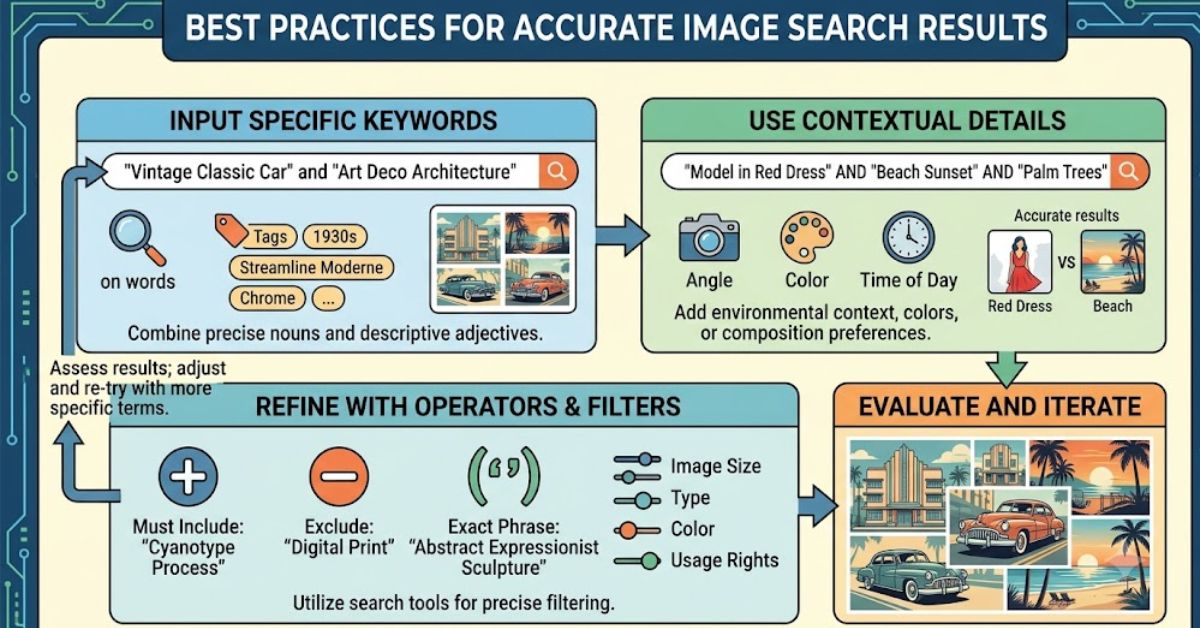
Successful image search techniques begin with using highly specific search terms. Instead of broad descriptions, include distinctive colors, materials, brands, locations, or objects. Most search engines also provide filters for image resolution, licensing, color, and publication dates that significantly improve search precision.
When performing reverse image searches, isolate the exact object you want to identify. Cropping unnecessary background elements prevents search engines from focusing on unrelated objects. This simple adjustment often produces much more accurate matches, particularly when identifying clothing, furniture, artwork, or consumer products.
No single platform indexes the entire internet. Cross-checking results across Google Images, TinEye, Bing Visual Search, and Yandex Images increases the likelihood of discovering additional matches or identifying an image’s original publication. Different indexing methods often uncover sources missed by competing search engines.
OCR technology deserves special attention because it extracts printed or handwritten text directly from images. Users can instantly copy, translate, or search for words found in screenshots, scanned documents, signs, menus, business cards, or printed materials without manually typing the information.
Optimizing Your Own Images for Better Search Visibility
Website owners should optimize every visual asset to improve visibility in image search results. Start with descriptive filenames that clearly explain the image contents. Instead of generic filenames like “IMG12345.jpg,” use meaningful names such as “black-leather-office-chair.webp” to provide better context for search engines.
Alt text remains one of the most important optimization elements. Well-written alt descriptions improve accessibility while helping search engines understand image content. Descriptions should naturally explain what appears in the image without excessive keyword repetition or unnecessary promotional language.
Modern image formats such as WebP and AVIF offer smaller file sizes without sacrificing quality. Faster-loading images improve user experience and contribute to stronger website performance. Combining compressed images, responsive sizing, structured metadata, and image sitemaps increases the likelihood of successful indexing.
The Future of AI-Powered Image Search Techniques
Artificial intelligence continues to transform how visual search operates. Deep learning models now recognize increasingly complex relationships between objects, environments, colors, and contextual clues. Rather than simply matching identical images, AI understands visual meaning and user intent with remarkable accuracy.
Future image search techniques will become even more conversational. Users will describe scenes naturally or combine voice commands, uploaded images, and written prompts simultaneously. Enhanced multimodal search will deliver highly personalized results across shopping, education, healthcare, travel, and digital content creation.
As AI evolves, visual search will likely become integrated into everyday devices through smartphones, smart glasses, and augmented reality applications. This shift will make identifying products, translating signs, verifying information, and discovering visual content nearly instantaneous in real-world environments.
Conclusion
Modern image search techniques have evolved far beyond simple keyword searches. Today’s AI-powered platforms analyze objects, colors, patterns, text, and visual relationships to deliver highly accurate results for both personal and professional use.
Whether you need to verify an image’s authenticity, locate similar designs, identify products, perform OCR, or optimize your own website’s visuals, understanding these techniques helps you work more efficiently. By combining multiple search platforms with proper optimization practices, users can unlock the full potential of visual search technology in an increasingly image-driven digital world.